Flat Clearance Canary Wharf — Recycling and Sustainability
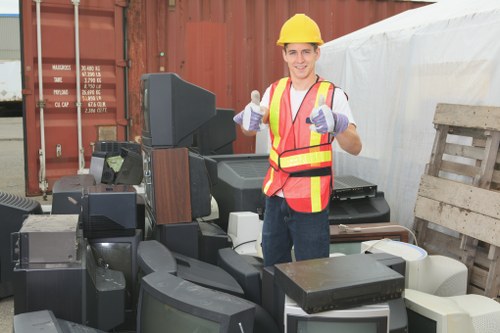 Flat Clearance Canary Wharf is committed to delivering an eco-friendly waste disposal area approach that goes beyond simple rubbish collection. Our Canary Wharf flat clearance services prioritise reuse, repair and recycling so that every house clearance, apartment clearance or office tidy-out contributes to a more sustainable neighbourhood. We combine local knowledge of the Isle of Dogs and Tower Hamlets boroughs with practical systems to maximise diversion from landfill.
Our operation follows the boroughs' approach to waste separation — encouraging residents and clients to segregate food waste, mixed recycling and glass when possible — and we take extra steps at collection to sort items for onward processing. By working within existing local collection schemes and adding our own sorting at point of pickup, we reduce contamination and increase recovery rates.
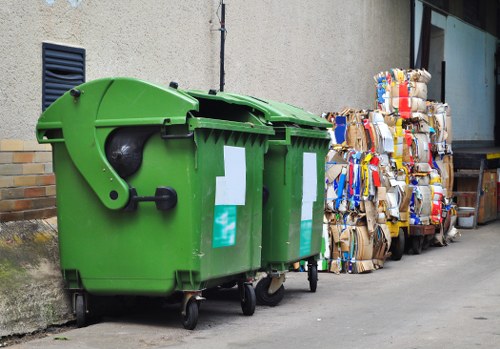 As part of our sustainable rubbish area plan, we have set a clear recycling percentage target: a company-wide aim to achieve 70% recycling, reuse and recovery of all materials collected across Canary Wharf clearances within the next 24 months. This target covers bulky items, furniture, appliances and construction-type waste from small domestic refurbishments. Reaching this goal means directing usable goods to reuse channels, sending recyclable materials to MRFs, and responsibly disposing of residues.
Local transfer stations and materials handling
We operate with direct links to local transfer stations and Materials Recovery Facilities that service East London and Canary Wharf. By using nearby transfer points, our rubbish removal Canary Wharf routes are shorter and more efficient — lowering emissions and turnaround times. These transfer stations help us sort paper, cardboard, metals, glass and hard plastics for onward recycling into the right waste streams.
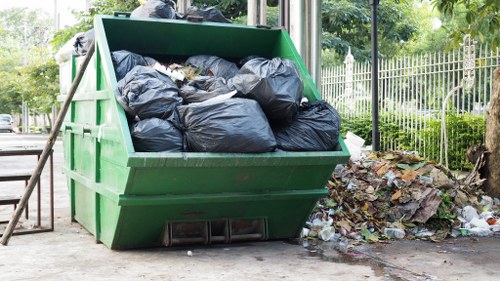 Our collection crews are trained to identify items that can be diverted to reuse networks or charities before they reach a transfer station. A proactive sorting process on-site reduces processing at the stations and boosts the percentage of material re-used locally. We also prepare electrical items for WEEE processing in accordance with regulatory standards, ensuring responsible handling of hazardous components.
To keep the sustainable rubbish area effective we use a simple waste categorisation that clients can see at the point of pickup:
- Reuse-ready items — furniture, books, household goods
- Recyclable materials — paper, card, metal, glass, plastics
- Special handling — WEEE, mattresses, hazardous tiny quantities
Partnerships with charities and community organisations
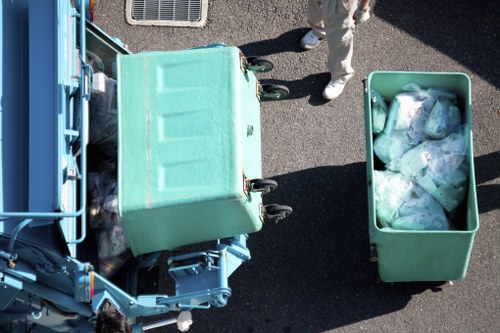 Strong partnerships with charities are central to how we reduce waste. We collaborate with local social enterprises, furniture banks and community reuse projects across Tower Hamlets and neighbouring boroughs to donate usable items recovered from flat clearances. By channeling quality second-hand furniture and household goods to these organisations, we extend the life of products and support vulnerable residents in the area.
Our charity partners receive items that meet safety and quality checks, while community projects benefit from a steady stream of donations that would otherwise be disposed of. These relationships also help us achieve the recycling percentage target by turning potential waste into resources for local people, reducing the pressure on landfill and incineration facilities.
 We maintain active communication with partner charities so collections can be scheduled, and items can be matched to needs quickly. This collaborative model allows clients who book a Canary Wharf flat clear-out to opt-in to donating items as part of their service, creating a measurable impact in local reuse rates.
Low-carbon vans and greener logistics are part of our everyday operations. Our fleet includes electric and hybrid vans used for last-mile deliveries and clearances in denser parts of Canary Wharf, plus Euro-6 engines for larger-load days. Route optimisation software reduces mileage and idling times; combined with low-emission vehicles this approach reduces the carbon intensity of each clearance job.
We track carbon performance per job and continuously invest in newer, cleaner vehicles as technology improves. Our drivers are trained in eco-driving techniques and waste handling protocols to ensure that every flat clearance in Canary Wharf is as low-impact as possible. This operational focus complements our recycling and reuse efforts to build a comprehensive sustainable rubbish approach.
By integrating charity partnerships, local transfer station use, a clear recycling target and low-carbon vans, our Canary Wharf flat clearance services create a circular approach to waste. We aim to be a model for how flat clearance and rubbish removal can be part of a neighbourhood's sustainability plan. If you want your clearance handled responsibly, our processes prioritise people, planet and practical outcomes: less waste to landfill, more goods reused, and lower transport emissions.