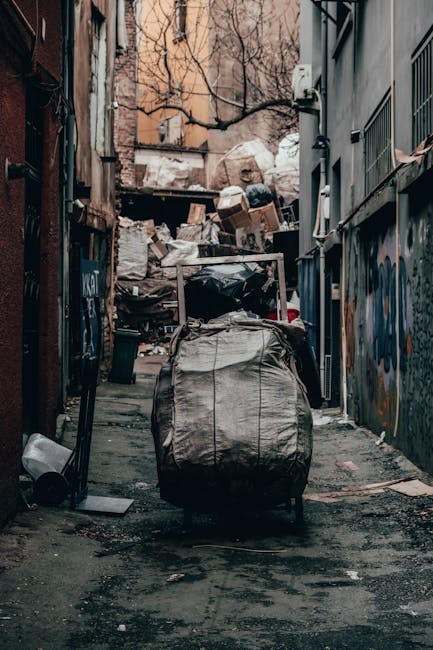
Bulky rubbish collection Marsh Wall E14 for flats: a practical guide for residents and landlords
If you live in a flat near Marsh Wall and you've got a sofa blocking the hallway, a mattress leaning in the spare room, or a pile of awkward household items you simply cannot carry down yourself, Bulky rubbish collection Marsh Wall E14 for flats quickly becomes less of a nice-to-have and more of a relief. Flats bring their own headaches: tight stairwells, lift restrictions, concierge rules, parking hassle, and neighbours who do not want a chest of drawers parked in the lobby all afternoon. Truth be told, that's exactly why a flat-focused collection service makes such a difference.
This guide walks through how bulky rubbish collection works for flats in Marsh Wall E14, what to expect, how to prepare, and how to avoid the small mistakes that can turn a simple clearance into a long day of stress. It also covers practical choices around furniture disposal, appliance removal, recycling, and safe waste handling so you can make a sensible decision without second-guessing yourself every five minutes.
Why Bulky rubbish collection Marsh Wall E14 for flats Matters
Flats are different from houses in ways people only really notice once they need to get rid of something large. A sofa might be perfectly manageable in a living room, but the moment you have to move it through a narrow communal landing, around a corner, and down a lift that seems to stop on every floor except yours, the job changes. That is the basic reason Bulky rubbish collection Marsh Wall E14 for flats matters: it solves a real logistical problem, not just a waste problem.
There's also a social side to it. In blocks of flats, one person's overdue clutter can become everybody else's inconvenience. Shared entrances fill up quickly. Corridors feel cramped. Fire routes must stay clear. And if you leave items waiting in common areas "just for a bit", they tend to sit there longer than planned. We've all seen that one chair that somehow becomes a permanent resident of the hallway. Not ideal.
For Marsh Wall and the wider E14 area, there's an added layer of local reality: limited parking, busy roads, time windows for loading, and buildings where access is controlled by a concierge or by residents' instructions. A good collection plan takes all of that into account. It should respect the building, the neighbours, and your own time.
Expert summary: The best bulky waste collection for flats is not just about lifting items out. It is about safe access, clear communication, sensible sorting, and a collection method that fits the building you actually live in.
If your bulky waste is part of a broader clear-out, it may also make sense to combine it with flat clearance, furniture disposal, or mattress and sofa disposal rather than handling everything separately.
How Bulky rubbish collection Marsh Wall E14 for flats Works
In practice, the process is usually straightforward, but it helps to know the moving parts before you book anything. A flat collection service normally starts with identifying what needs to go, where it is located, and what access is available. That sounds basic, but it is the part that makes everything else run smoothly.
For example, a one-bedroom flat with a lift and a loading bay is a very different job from a fourth-floor apartment with no lift and a small street outside. One might be a quick two-person collection; the other might need a more careful carry plan and a bit of timing around neighbours and building rules. Same rubbish, very different job.
The service itself often includes:
- an assessment of item type and access conditions
- labour to remove bulky items from the flat
- loading and transport away from the building
- sorting for reuse, recycling, or responsible disposal
- careful handling of awkward items such as wardrobes, white goods, and broken furniture
Some items may need extra attention. Appliances, for instance, can involve cables, plugs, residual water, or doors that need securing. If you have old kitchen units, renovation waste, or mixed load debris, a broader waste removal or builders waste clearance option may be more suitable than a simple furniture pickup.
The key thing is that the collection should fit the building, not the other way round. That is the big difference between a clean, efficient job and a frustrating one that leaves everyone slightly irritated by lunchtime.
Key Benefits and Practical Advantages
Bulky rubbish collection for flats brings a few clear benefits, and not just the obvious "I have space again" feeling, which is honestly underrated. A proper service can save time, reduce physical strain, and help keep shared areas clear and safe.
- Less lifting and carrying: Heavy items are awkward in flats, especially down stairs or around tight corners.
- Reduced risk of damage: Walls, lifts, handrails, and flooring are easier to protect when the job is planned properly.
- Better use of your day: You avoid multiple trips to a disposal point and the faff of arranging transport.
- Cleaner communal spaces: Items can be removed quickly rather than stored in corridors or outside the block.
- More sensible recycling: Furniture, appliances, and mixed waste can be separated where possible.
There is also a quieter benefit: peace of mind. When a bulky item has been sitting in your flat for months, it becomes a sort of mental background noise. You stop noticing it until a friend comes round and says, "Are you keeping that?" Oof. A quick collection can clear the room and the headspace at the same time.
For residents who are moving out or reorganising a flat, this is often the point where related services become useful. A single unwanted sofa might need furniture clearance, while a wider reset could be handled through home clearance or even house clearance if the property is being emptied more fully.
Who This Is For and When It Makes Sense
This service is a good fit for a wide range of people, and not only when a flat is being emptied after a move. In fact, some of the most common calls happen for fairly ordinary reasons: a new sofa has arrived and the old one is in the way, a fridge has stopped working, or a tenant has left furniture behind. Nothing dramatic. Just life.
It makes sense if you are:
- a tenant clearing unwanted items before moving
- a landlord preparing a flat for new occupants
- a letting agent dealing with abandoned furniture
- a homeowner replacing bulky household goods
- a resident who cannot safely move heavy items alone
- someone with limited time, limited access, or both
It is also useful after refurbishment, when old items are replaced but the disposal part gets left until the end. That "we'll deal with it later" stage is usually where the pile starts to grow. Let's face it, later has a habit of becoming never.
If the items are mixed with storage leftovers, seasonal clutter, or long-term buildup, related services such as loft clearance, garage clearance, or furniture disposal may give you a better fit than treating each item separately.
Step-by-Step Guidance
If you want the smoothest possible bulky rubbish collection in Marsh Wall E14, the trick is to prepare the job in a sensible order. Nothing fancy. Just a few steps that remove the usual friction.
- List the items clearly. Write down what needs collecting and note whether anything is especially heavy, fragile, or awkward to dismantle.
- Check access in advance. Look at the lift size, stair width, parking options, concierge rules, and any loading restrictions.
- Separate special waste. Some items, such as appliances or potentially hazardous materials, should be flagged early so they are handled properly.
- Move smaller obstacles out of the way. Clear shoes, lamps, side tables, and loose clutter from the route if you can do so safely.
- Confirm collection timing. Make sure someone can provide access if the building requires it.
- Ask about recycling and disposal. It is reasonable to want to know what happens next, especially for reusable furniture.
One simple but very helpful tip: take a quick photo of the items before collection. Not because the team needs a dramatic portfolio shot, but because it helps avoid confusion about what should and should not be removed. A photo can save a surprising amount of back-and-forth.
If your flat contains bulky pieces that need specialist handling, such as a fridge, freezer, or washing machine, check whether the service can handle fridge and appliance removal. That is one of those areas where guessing is a bad plan.
Expert Tips for Better Results
The best collections usually look easy from the outside because the prep was done properly. A few small decisions make a big difference.
- Measure the item and the route. If a wardrobe just barely fits through the door, dismantling it first may be the smarter move.
- Keep shared areas clear. In a block of flats, don't let bulky items drift into corridors while you "wait for collection".
- Protect floors and corners. If the item is heavy and there's a risk of scuffs, use blankets or corner guards where appropriate.
- Tell the collector about restrictions. If the lift is slow, the porter needs notice, or parking is tight, say so early.
- Don't mix obvious hazard items with ordinary furniture. Paints, chemicals, and similar waste belong in a different category.
Here's a small real-world observation: flats with concierge access often run more smoothly when the resident has already spoken to building staff. A two-minute conversation can save fifteen minutes of waiting around in the lobby, and nobody enjoys standing there with a sofa on a trolley while the buzzer keeps buzzing.
For sustainability-minded residents, it is also sensible to ask how items are sorted after collection. A decent operator should be able to explain its approach to reuse and recycling. You can also explore the company's recycling and sustainability approach if that matters to you, which it often does.
Common Mistakes to Avoid
Most bulky waste problems in flats are not dramatic. They are just annoying, repeated mistakes that make the collection slower, dearer, or more stressful than it needed to be.
- Leaving items in communal spaces. This can block access and create friction with neighbours or building management.
- Forgetting about access dimensions. A lift that fits a chair may not fit a mattress-in-a-box after all the packaging is still on.
- Not separating special items. Mixed loads can complicate the job if appliances or potentially hazardous materials are included.
- Assuming every bulky item is the same. A sofa, wardrobe, and fridge all need different handling.
- Booking too late. If you are moving out, leaving the collection until the final evening is asking for trouble.
Another mistake is underestimating the emotional side of the job. Clearing a flat can bring relief, but it can also feel unexpectedly tiring, especially if you are working around a move, a bereavement, or a refurb deadline. In those situations, a structured service matters even more because it takes one layer of decision-making off your plate.
If items include sensitive papers or private documents, a separate confidential shredding service may be the safer choice than putting everything into general bulky waste. That little bit of forethought matters.
Tools, Resources and Recommendations
You do not need a toolkit the size of a DIY van to prepare for bulky rubbish collection, but a few simple things help.
- Tape measure: useful for checking doorways, lifts, and item dimensions.
- Marker pen or sticky note: handy for labelling what is going and what is staying.
- Phone camera: good for taking photos of items and access points.
- Gloves and sensible footwear: practical for moving smaller loose items safely.
- Basic dismantling tools: only if the item is safe to take apart and you know what you're doing.
From a service perspective, a useful starting point is to compare the collection against the overall job, not just the item count. If you're dealing with one mattress and a chair, you may only need a simple bulky collection. If your flat is full of unwanted furniture, boxes, and mixed household waste, then a broader flat clearance or home clearance may give you a better result.
For pricing and planning, it helps to speak clearly about quantity, access, and item type. That is exactly why a page like pricing and quotes is worth reviewing before you commit. Not because every job is expensive, but because clarity usually saves money and hassle.
Law, Compliance and Best Practice
When bulky rubbish is removed from flats, the work should be carried out responsibly and in line with normal UK waste-handling expectations. You do not need to know every detail of waste legislation to ask sensible questions, but it is fair to expect a service to handle items properly, avoid unsafe lifting, and dispose of waste through appropriate channels.
In practical terms, that means a few things. Waste should not be fly-tipped. Items should be transported and processed responsibly. Hazardous or specialist waste should be separated rather than lumped in with ordinary furniture. And if a building has rules about access, those should be respected. Simple, really, though it is surprising how often that gets forgotten.
Best practice for flat collections also includes:
- clear communication about what is being removed
- safe manual handling and sensible team sizing
- protection of shared building areas where needed
- sorting for reuse or recycling where possible
- careful handling of electrical or bulky appliance items
If you want added reassurance, it is reasonable to check operational policies around safety and insurance. Pages such as health and safety policy and insurance and safety can help you understand how the work is approached. And if you want a broader overview of how items are processed, what can go in a skip is also useful for understanding sorting boundaries, even when a skip itself is not the right solution for a flat.
Options, Methods, or Comparison Table
There are usually a few ways to get rid of bulky items from a flat. The right one depends on volume, access, urgency, and whether the items can be reused or recycled.
| Option | Best for | Pros | Watch out for |
|---|---|---|---|
| Bulky rubbish collection | One-off heavy items or small loads | Quick, convenient, flat-friendly | Needs clear access details and item list |
| Flat clearance | Multiple items or a fuller clear-out | Efficient for larger jobs, fewer repeat visits | Can be more involved than a simple pickup |
| Furniture disposal | Sofas, tables, wardrobes, cabinets | Good for specific household pieces | May not suit mixed loads |
| Appliance removal | Fridges, freezers, washing machines | Safer for electrical and heavy items | Needs correct handling and separation |
| General waste removal | Mixed waste beyond furniture | Flexible for odd jobs | Not ideal for every specialist item |
For many flat residents, the best answer is not the cheapest-looking one on paper. It is the one that fits the building, the items, and the time you actually have. That sounds obvious, but in a busy place like Marsh Wall, obvious can be very useful.
Case Study or Real-World Example
Here is a realistic example. A tenant in a Marsh Wall apartment is moving out at the end of the month. They have a sofa, a broken bedside cabinet, an old mattress, and a fridge that is no longer working. The building has a lift, but it is narrow, and the concierge only allows loading in a short morning window. On top of that, the street outside gets busy very quickly.
A rushed approach would be to leave the items in the hallway and hope for the best. That tends to create stress straight away. Instead, a better plan is to list the items, check the access window, confirm which pieces need special handling, and arrange a collection that can remove everything in one visit. The fridge is handled separately from the furniture, the route is kept clear, and the flat is emptied without turning the corridor into a temporary storage unit.
The main lesson? Planning around the flat and the building matters as much as the rubbish itself. In practice, the smoothest jobs are often the least dramatic ones. No heroics. Just a well-timed lift, a clear path, and a sensible loading plan. That's it.
This is also where broader services can help if the job keeps expanding. A simple sofa pickup can become a fuller furniture removal, and before long you may be better off with a structured furniture clearance than trying to keep piecemeal on top of it.
Practical Checklist
Use this checklist before booking your bulky rubbish collection in Marsh Wall E14 for flats:
- Identify every item that needs collecting.
- Check whether any item is fragile, electrical, or hazardous.
- Measure large items and note doorway or lift constraints.
- Confirm whether the building needs advance access arrangements.
- Clear the route from the flat to the exit where possible.
- Separate documents for shredding and keep them away from waste items.
- Ask what happens to reusable or recyclable materials.
- Make sure someone is available at the agreed time.
- Keep communal areas free of loose items and obstructions.
- Review pricing and service details before confirming the job.
If the collection is part of a bigger clean-up, related services such as office clearance can be helpful for home workers or mixed-use spaces, while business waste removal may be more relevant for landlords or property managers dealing with multiple units.
Get a free quote today and see how much you can save.
Conclusion
Bulky rubbish collection in Marsh Wall E14 for flats is really about making a difficult bit of flat life feel easy. When the access is tight, the stairs are awkward, and the building has rules to follow, a sensible collection service removes a lot of pressure. It helps you avoid damage, saves you from heavy lifting, and keeps the shared spaces cleaner for everyone.
The best results come from a simple formula: know what needs removing, understand the access, separate specialist items, and choose the most suitable collection method for the size of the job. Once that is in place, the rest tends to fall into line.
And if you are still looking at that bulky item sitting by the wall, waiting for you to make a decision, well, this is probably the nudge you needed. Clear the space, clear the mind, and move on to the nicer part of the day.
Frequently Asked Questions
What counts as bulky rubbish in a flat?
Bulky rubbish usually means large household items that are awkward to move and do not fit into regular bags or small bins. Think sofas, mattresses, wardrobes, tables, chairs, appliances, and similar oversized items.
Can bulky items be collected from upper-floor flats?
Yes, but access details matter. Lift size, stair width, parking, and building rules all affect how the job is handled. Upper-floor collections are common, they just need a little more planning.
Do I need to move the items outside before collection?
Not necessarily. In many cases, the collection team will remove items from inside the flat. That said, clear access helps, and some buildings have specific rules about where items can be left before pickup.
What happens to furniture after collection?
Good practice is to sort items for reuse, recycling, or responsible disposal where possible. If something is still usable, it may be assessed differently from broken or heavily damaged items.
Can a fridge or washing machine be taken with other bulky rubbish?
Often yes, but appliances should be flagged in advance because they may need separate handling. Fridges, freezers, and washing machines are not just "big items"; they can have special disposal requirements.
Is bulky rubbish collection better than hiring a skip for flats?
For many flats, yes. Skips can be awkward where space is limited or parking is restricted. A collection service is often more practical because the waste is removed directly from the property.
How far in advance should I book a collection?
As early as you can, especially if you are moving out or working to a building access window. A bit of notice usually makes it easier to fit around concierge times and parking constraints.
What if my building has a concierge or strict loading rules?
Tell the service about that before the collection. It is much easier to plan around access rules than to discover them on the day when everyone is already standing in the lobby.
Can hazardous items go with bulky waste?
No, not usually. Hazardous waste should be separated and handled appropriately. If you are unsure, ask before the collection rather than mixing it into the load.
How do I know whether I need flat clearance instead?
If you have several items, multiple rooms, or a more extensive clear-out, flat clearance may be the better option. If it is just one or two awkward pieces, a smaller bulky rubbish collection may be enough.
Will the service help with dismantling furniture?
Some collections can include dismantling, while others expect items to be ready to move. It is best to ask in advance, especially for wardrobes, bed frames, or larger shelving units.
Why is Marsh Wall E14 a tricky area for bulky collections?
It is a busy part of London with flat developments, managed access, and limited parking in many places. That combination makes planning more important than in a typical street-level house pickup.
Can a collection service also handle documents or confidential paperwork?
Yes, if the provider offers a separate confidential shredding service. That is usually better than putting paperwork into bulky rubbish, especially if it contains personal or business information.
What is the main benefit of using a flat-focused collection service?
The biggest benefit is that it fits the reality of flat living. Shared spaces stay clearer, lifting is handled safely, and the work is planned around access instead of treated like a quick driveway pickup.